Being a part of "YWAM Storytellers International" - www.ywamstorytellers.com - this blog is created to be a place for different stories to be told, showed and shared.Stories of people being changed, stories of God transforming communities and societies, stories of the world being put back together.
The world is full of stories. Some of them have been lived out, some have been told and some have been kept as secrets. The photos of the postcard album “Time.Place.” were created in 2009 in Argentina and Chile, capturing 14 moments from the beautiful South America.
The photo album was created in 2009/2010 in Europe by a team of 5 young people from Latvia and Norway. In the beginning of 2009, they traveled through Argentina and Chile, experiencing Latin American culture, listening to the stories of people, and capturing these stories in photography and writing while doing social service in different places and communities. Stories that they came across and documented during the project can be found in this blog.
This project was possible with the kind end empowering support of YWAM Storytellers, EU program Youth in Action and Club “The House” - Youth for United Europe.
South America, North Argentina, Mision Tacaagle.
Once pushed out from their original home lands,
the Toba community has now settled
on the land officially given to them by government.
In the old days Toba people were nomads.
While men were fishing and hunting,
women were gathering plants and looking after children.
Times have changed and Tobas live differently now.
As there are less animals and fish, they are more involved in agriculture.
The Toba women look after children, cook,
wash clothes and do many more things while men are out.
Nowadays Tobas live in communities and share the land.
Houses are built from palm trees and each house can host one or more families.
Pace of life in the community is slow.
People spend a lot of time together, talking, drinking mate or just observing.
The language they speak among each other is also called Toba.
However, it is a dying language and Toba people remember with sadness
that they were not allowed to speak their mother tongue at school.
Tobas have large families with a lot of children (6-7 on average).
During the day you see a lot of childern playing and looking after each other.
Some would say that this is 100% organic lifestyle.
Tobas grow most of the food they need,
as well as get most building materials and tools from the nature.
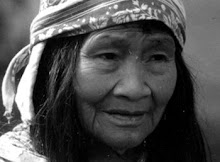
Observing and thoughtful, 83 years old Jose Roca Castorini is casique or chief of Toba community in Mision Tacaagle. He makes major decisions together with counsel of other men of community.
His son will take over his duties from him as in many communities this position is inherited.
Delia Sanchez is 38 years old and has 7 children.
She is a real soul of the house and she
loves to make handicrafts and look after her children.
Toba women know how to make textiles and decors from colorful wool threads,
traditional bags, and baskets from the leafs of the native palm tree (called carandilla).
They are used for house needs, given as presents or sold to provide family needs.
Often centre and meeting point of Toba community is
the local church where people meet,
discuss latest news, spend time together.
Tobas -one of the largest indigenous groups in Argentina-
around 48 thousand tobas mainly living in Northern provinces.Yearly there is a day of Friendship when people from neighboring
Toba communities come together- to share laughter, food and joy. To a stranger they are like hiding pearls - close and trustless at the first glance,
but once befriended- open and incredibly beautiful
.
Quick, hurried steps, light laughter and "Bueno! Nos vemos!"** said in Spanish with a strong italian accent are sounds that over and over again resounds in the walls of an old Catholic Convent of Mision Tacaagle. The locals - young and old pass through the Convent.
Mision Tacaagle is a little, rugged town in the North of Argentina only about 10km away from Paraguay border. A place with a slow rhythm of life and heat. A place where indigenous Toba communities live few kilometers from white man. A place of amazingly rich and good soil. A place where one can observe machoism and can begin to wonder how much of horrifying statistics of domestic violence, sexual abuse and poverty of the North of Argentina are made up here. A place of needs. This place has become a home for a 32 year young italian nun Irene.
Irene saying good-bye to another visitor
Irene's presence makes you feel as if there was a light, warm and gentle wind. With an unarmed eye one can see - she is a soul of this 108 year old Convent, which has become a place of refuge, counsel, trust and restoration as for indigenous people of the area as for argentines and paraguayans who live in this town.
Warm hearted italian laughs as she tells her story of coming here. "When I came to live here first my italian lineage and rebellious nature was boldly obvious to everyone - I wanted to make a revolution here. So for a little while I was banging my head against the wall from a huge desire to see things changed. Only with time did I learn - that I have to listen, observe and sometimes just simply be. Relationships and trust grow little by little. People here don't rush neither with work or life, neither with truly entrusting someone. But now after while there are many who come to talk, share their heart, seek counsel, comfort or practical help as there are not many places to go in town, no social services, no assistance. Sometimes it seems like the Convent is like a social agency of the town."
Catholic Convent in Mision Tacaagle
Irene's days are never the same. Studying stories of God with children, a quiet conversation with toba woman while looking at her crafts, chatting and counseling with a local family. Going on her bicycle to visit someone in need of love and affection in faraway place of town. Being with Angelica, a 16 year old girl who lives with her in the Convent. Spending time in prayer. She just is. She recognizes that her purpose of being there is just to be and to give others affection, love, touch, listening ear and understanding when needed. And she lives it out so naturally and lightly. Somehow her presence puts you in an ease, makes you feel a valuable person, born with a purpose and destiny. And you realize - I know someone else, someone up there who is very much in to this kind of thing.
*Solo estar (Esp.) - Just to be **Bueno! Nos vemos! (Esp.) - Good! See you!
Tierra del Fuego and its southernmost town of the world - Ushuaia - is a place surrounded by stormy seas, dramatic mountains and ancient forests. It not only attracts people with its nature and wilderness, but also with the many work opportunities, since Tierra Del Fuego is one of the economically most developed provinces of Argentina.
Javier (41) arrived in Ushuaia as a backpacker at the age of 19. He left his hometown Rio Quarto near Cordoba to follow his ideals and passion for nature and wilderness. For the first 8 months he did not have a permanent residence and stayed in a tent in a forest. He remembers that time with a smile in his face: “During those months I grew a lot, matured as an individual, formed a perspective for my life and learned to value family and comfort,” he says. Ushuaia became his home.
Origins of Ushuaia are found in a Christian mission that was started in the area around the Beagle Channel in 1850s. Early missionaries came with their faith and ideals. They were first foreigners to settle down in this area, back then populated by yaganes, an indigenous tribe. The town started as a community formed on basis of the Christian values. 30 years later government of Argentina founded Ushuaia as a city, bringing all the blessings and curses of the contemporary lifestyle that only quickened the extinction of yaganes as a separate ethnic group.
Right now Javier works for the provincial government of Tierra del Fuego. He has two responsibilities - youth and religious organizations. He is respected at his work and society as a man who lives according to his words. There have been times when the governor himself calls Javier to ask for his opinion on different matters. Javier wants to keep working in the government not only in a local, but later also in a national level: “At some point I would like to work for the state government. I think it is very important that people with principles and values are in places where decisions for the whole society are made. It is not an easy work, but it is a needed one.”
Once Ushuaia was a small town, with people who love the place and feel that they belong. During the past 30 years town has grown incredibly, and the economic developed has attracted thousands of people from all over the Argentina. People come with different mentality, thoughts and attitudes, some of them - just to stay for a while to earn some money and then return back home. “Short term thinking has brought crisis of values in Ushuaia and it affects everybody,” says Javier. “The biggest crisis is the not the one of economics but the one of values, and it is happening right now. I want to spend my energy on making the society aware of the values that have been neglected – family, friendship, companionship.”
Javier knows what he is doing and why. He dreams of a social transformation and a change in how people see and treat each other. He would like to involve more people in decision making process in Ushuaia so the provincial government would become more people oriented; he would also like to see people working together more, including everyone in the process. There are many more ideas Javier would like to carry out for his city and his people. This is just the smallest part.
There are people who create history. There are people who write it down later. And then there are those who manage to do both - like Julio Rodrigez, a historian from Ushuaia, the very southernmost city not only in Argentina, but in the world as well. Though Ushuaia may seem like the very end of the world, for some it is a beginning of an exciting and adventurous life.
Julio live in the studio in his weekly radioshow, on Radio Nacional.
„I came to Ushuaia from Cordoba when I was 18. There were only 4000 people living here, and the city had only one paved street,” says Julio (63), who has not only been a history teacher for almost all his life, but is also an author of many books and a host of his own program on the national radio - an hour long show about culture and folklore. When we are invited to speak on his show, the hour spent in the studio passes by full of laughter and fun – it is easy to talk to Julio, and his curiosity and positive attitude are almost contagious. Julio’s dynamic energy and optimism are really needed in the place which is located on an island, separated from the rest of Argentina. “Yes, many people feel lonely here. They come from all of Argentina to work here and have a better life, but end up being alone, without friends and family. I see that almost every day,” points out Julio, who maybe better than anyone else knows what is going on in the not-so-little-anymore community of Ushuaia.
Julio has lived in Ushuaia for more than 45 years now, witnessing all the changes the city has gone through. After retiring, he decided not to keep his knowledge and observations about Ushuaia to himself, and started to write books on the history, events and people of the city. Once the ball got rolling, he couldn’t stop – there are just too much to tell! “In 1999 I published my first book, called "Stories about life in Ushuaia". The next one came seven years later. That one talks about the history of Ushuaia and how the gospel was brought here by missionaries from England,” Julio keeps telling, while showing us his books. “Now I am working on a book about the biggest family in Ushuaia. It has more than one thousand members!”
Julio showing us one of the 5 books he has written.
We listen to Julio, and can’t stop wondering how it is possible for one man to go through so many different things in one lifetime! He has been a teacher, administrator, press secretary for the local government, policeman, leader of the hospital of Ushuaia – the list goes on. A light smile appears in his face, when he talks about music – in his twenties, after winning the main prize in the biggest folklore festival in Argentina, Julio and his band played for Argentina’s president Arturo Umbert, bringing tears in his eyes. Julio seems to have a story about every job he has done and every person he has met. When asked what he has enjoyed the most out of everything he has done, he replies without hesitation: “Being a dad. I love my three children, and the thing about being a father is that there is no manual on how to do it. You just have to learn on the way.”
“He has a great gift of speaking with people about anything – life and God, and in between,” says pastor Claudio, one of Julio’s closest friends. “He loves people, and he has got a great patience with them. When his radio show is on, people always want to call and participate. He has a great impact on the community here”. And it is not hard to see, because everywhere Julio appears, people come to greet him and have a little chat. He always finds a minute to talk to them, and maybe that’s how Julio will find the next story to tell. Or the story will find him.
„...It is for you to take what you need for yourself. God is watching! It is not for selling!” Aide says in a kind but firm voice, while passing the bags of food and clothes to people around her. “And don’t thank me! Thank God because He is the one giving us all this!” In the midst of clothes, books, fresh baked bread, mate cups and people coming and going, it is amazing how Aide and her friends manage to move without knocking something or someone over. It is another busy afternoon for the grandmas, charming ladies in their sixties, from the “Centro de abuelos”*, as they, with youthful energy shining through, light up the day for those who have come for the help.
Aide is watching a man from Chile checking out some shoes that he might bring home for the winter
While hundreds of retired people in Bariloche, Argentina are spending their days in poverty, struggling to get by, there are people who have chosen not only to do something about it in their lives, but also help to those who can’t help themselves. In the grandmas’ from “Centro de abuelos” world, age is not an obstacle to help someone) actually, it’s quite the opposite – being retired gives a chance to come together, talk, share what they know and bring a change in the community.
The regular crew outside the little green house.
“Each day we give out at least 40 portions of food for the poor pensioners of the neighborhood, so that they can have at least one warm meal a day. Sometimes we give them groceries that they can bring home. A few years ago many retired people didn’t have any income, now the situation is better - the government is helping a little, also for the ones who hadn’t had a job,” says Aide, while keeping arranging food bags. She doesn’t stop moving, keeping an eye on everything that goes on in the house of grandmas. “Every once in a while we give out clothes too. Sometimes we visit people in their homes to see if they are alright. There is a lot of work to do.” She and her friends all are volunteers who come to the little green house every working day, being there for each other and those who need support.
Grandmas are not only helping the community in practical ways. Realizing that lack of fellowship and friendship sometimes hurts more than poverty, they provide a place where retired people, mostly women, can come to spend some time together, have a chat, share the latest news and do something they like. Knitting, crocheting, cooking, reading, making natural cosmetics – you name it! Together they organize workshops to learn something new and to break out of the daily routine. “Sometimes are able to sell what we have made, and then we can buy more wool or other materials to make something new!” says Susanna, the accountant of the place, who keeps a track of how the money is spent. “Sometimes we also go on excursions together – it is nice to get out of the city and see something else!”
Volunteers and visitors sharing some stories and laughter.
It is easy to feel that they really believe in what they do. With what they have and who they are, they really do bring a change in the place they live in. They keep laughing and joking while knitting; they sing songs and watch TV together, creating a community where people are not only there for each other but also for the ones from (the) outside. “We don’t want to sit at home and cry because we are old. We want to go and do something good!” says Veronika, one of the grandmas with a big smile. And they do. Every day.
The Mapuche Indigenous people live in the south of Chile and Argentina. They are a simple and timid people, and many of them don´t have much contact with the outside world. They have their own language - Mapudungun - but it is not used very often.
The Mapuches of San Ignacio live a quiet and secluded life in harmony with nature. The community is situated 80 km from the nearest town,Junin de los Andes, where they go about once a month to buy supplies.
"Once during winter I was driving back from a visit, and the car broke down in the middle of the dessert. I had to spend the night in the car,then walk out to the highway the next day to get help." says Guillermo Perez, pastor of a church in San Martin de los Andes, 2 hours drive away. He used to come to visit his friends in San Ignacio every week, but now he is able to go only once every month.
In the Mapuche community, the women are the face of the family. Margarita lives alone with two of her brothers, a 30-40 minute horse ride from the nearest neighbor. All her children have moved out of San Ignacio and started their own lives and families.
There are three things that are sacred to the Mapuche: the Weapons, the Women and the Horses.
Guillermo always brings something when he comes, this time it is kerosene, as the winter is getting close and the houses will need to be heated up. With the kerosene it is possible to get the humidity out of the wood in order to start the fire.
Not many people own a car in the community. When it's needed to go to town to get supplies, they gather together to fill up the car. In many ways you get further on a horse than by car in this rugged landscape.
Guillermo strikes a tune at Don Ignacio's house. The Mapuche and their ancestors used to serve Nguinechen, the Mapuche God,but now some have come to know God the creator. Don Ignacio is the pastor in his community.
This used to be the home of Don Ignacio's family of 6 up til recently. During the past 10 years the Municipality of Neuquen have been building new houses for the Mapuche families. The families don't tear down the old houses. When the oldest member of the family dies, they take off the roof so that the spirit can leave.
The last part of the house is being finished, now it only lacks the painting on the walls. Ignacio's wife, Doña Rosa serves us mate. The Mapuche are a hospitable and sharing people, not slow to tell you to sit down, share some mate with them, and offer you some home made bread.
The fruits of the modern civilization....
Sheepskin is both used in the households and sold to get some income.
Building friendships takes time and patience. Guillermo says that his aim is not to convince his friends about a certain belief or impose his modern culture, but to help them realize who they are and the value they possess.
Guillermo leaves in his 1979 year model jeep, not knowing when is going to be the next time he will be back. Today he visited 3 families, but hopefully he will be able to see more of his friends next time. "It has been a good day!" he says, and we can only agree.
* In Mapudungun, the mapu means "the earth" and the che means "the people"
Pastor Guillermo D. Perez has been working with San Ignacio Mapuche community for several years now and is currently trying to raise more support throughout Argentina to his work. If you feel like wanting to help him in any way, please contact him (preferably in Spanish): cuentaconmigogk@hotmail.com or ice@smandes.com.ar
It’s a sunny afternoon in Zapala. The streets are quiet, it seems like the siesta has taken it’s reign.
The door to the Reyes family's house is open. Open for a reason - it is not unusual that people come here to talk with Nelly - ask her for counsel, help or prayer.
Nelly is in her fifties, with a warm smile and deep, dark, loving eyes. Her simplicity and bubbling laughter disarms. When she talks it seems like peace and love become more tangible, more present. Mother of nine children, wife and grandmother, Nelly is loved in her community, she spends her days not only looking after her own flock, but also pouring out herself for others: embracing the abandoned, praying for sick and the brokenhearted, feeding the poor, helping in a children's home and at the hospital. She is there for Zapala and it’s people. But it hasn't always been like that. The Woman who now brings hope and restoration to others was once very broken herself.
Nelly shares the excitement about the November afternoon that turned her life upside down
Brought up in a family of 13 kids, where her mom only cared about the oldest and the youngest, she didn't experience love and affection. Her parents were from two different Mapuche Indigenous tribes and they got married against the traditions. As the young mapuche Romeo and Juliet broke the customs, a curse was cast over the family and generations to come - to never prosper. They didn't have much and as soon as prosperity would come knocking on the door, quickly it would be gone. Like a vicious circle that would not stop even when Nelly started her own family. As she recalls, the early years of her marrige and bringing up the children the tears start streaming down her face. "I didn't know how to love my family. My selfhatred, depression, loneliness and childhood wounds kept me from showing care and affection to them."she shares. "One day my husband told me that if I didn't change he would leave me. That was when I hit the bottom. How could I possibly bring up the kids by myself? I was desperate, nothing and no one could help me." At the brink of giving up, the unexpected happened...
Childlike excitement spreads in the air as she starts telling this part of her story. A story about God meeting a broken woman. "I still remember it very clearly. It was a sunny november afternoon 13 years ago. A neighbor had been bringing me to a christian prayer group. Several times the people there had been praying for me but nothing happened and I was getting upset. That day I left the meeting and came home angry with people and God. Throwing away the New Testament they had given me, I bursted out- "God, if you really exist show it to me! After a few seconds I suddenly started to feel an undescribable, comforting warmth, love and peace. Love that I had never known in my life was there. At that moment God became so real to me…" She sighs peacefully.
That November afternoon has changed Nelly’s life upside down. Her broken life and relationships are being healed and restored, the curses that were spoken over the family have lost their grip - the vicious circle of never prospering has ended. She is filled with hopes and dreams for the future. One of her dreams is to open a feeding program for people in need. Her days now have a sense of purpose. A Purpose to bring hope and restoration to others. To Zapala.
It’s another day in Zapala, a small town in the Neuquen province in the South-West of Argentina. A dry wind is blowing; everyone is looking for a shelter from the sun. You would think that a desert is something that doesn’t have much life in it, a place where you have to fight for your existence, thinking firstly of yourself and only then of those around you. All though sometimes this is true, Juan Alberto Azocas is someone who has been going against the stream, proving that love overcomes all wrongs and hope heals the brokenness. For the Zapala community, he is not only their shoemaker, but also the one who has brought lots of life, hope and joy to the people around him.
Everyone who enters the shoeshop get greeted with a warm smile and kindness.
“My shoemaker shop is a talent I have been entrusted to take care of, just like in that story in the Bible, but for me it means something more than just doing my best with repairing the shoes,” says Alberto, with a bright smile on his face and a large apron around his waist. The sixty-two year old man looks more like a counselor or a teacher than a shoemaker. “For me, it goes together with the gift of serving people, doing everything I can to help them. I don’t worry about the money – I believe that if you do your job well, the money will come.” Though he indeed does his job with an excellence, in Alberto’s world, helping people doesn’t mean just fixing their shoes. It means doing whatever he can to bring back joy and peace into their lives – praying for a couple who cannot have a children, helping a woman who has been beaten up by her husband, bringing a lost soul to a church or just lending a listening ear to someone who is going through a hard time. For Alberto, people are more than just clients, and his shoemaker workshop is more than just a workplace. “Many of the people who first came to me to fix their shoes, now are like children to me,” he says. With many of them he has stayed in touch, and they keep coming back for a chat, prayer or a piece of advice.
This policeman and his wife weren't able to have children for many years, he came into the shoeshop one day and got to know God through Juan Alberto, and was prayed for. They now have a beautiful one year old daugther.
Though so beloved by his community, Alberto was not born in Zapala. He came to Argentina more than 30 years ago, leaving behind his life in Chile and following God’s calling, helping to start a church in Argentina. After serving the first years as a pastor, because the church didn’t have one, Alberto decided to leave his ministry to some one else. That left more time not only to focus on shoemaking, but also create relationships with people, which has been more than rewarding. “There was a woman, a schoolmaster, who we prayed for after she kicked us out of her school, because we wanted to hand out New Testaments to the school kids,” he shares one of the stories. “After four years, she came into my shoemaker shop saying that the Bible she received from her friend, who got it from me, saved her from committing suicide. The woman hugged me, saying she would like us to give out the New Testaments in her school.”
Juan Alberto proudly shows his Gideon card. As an active member of the organization he gladly gives out the New Testament to all that want one.
Alberto has tons and tons of stories like that. About his mom who was healed from a serious heart disease. About teenagers who stopped using drugs. About people who have gotten out of depression and started a new life. And that is not all. There are more to come, little pieces of miracles walking in and out of his shop while he greets everyone with a smile and an encouraging word from the Bible or his own wisdom. The people of Zapala keep coming to Alberto’s shop, leaving not only with their shoes repaired but lives mended as well.